



Quote for HDPE cages: Costs & solutions for sustainable marine farming
16/03/2026
Share:


What does the HDPE cage assembly include?
To understand HDPE rafting quotes, you first need to know what components you are paying for. A complete system includes more than just plastic pipes:
Cage system (accounts for 50 - 60% of total price)
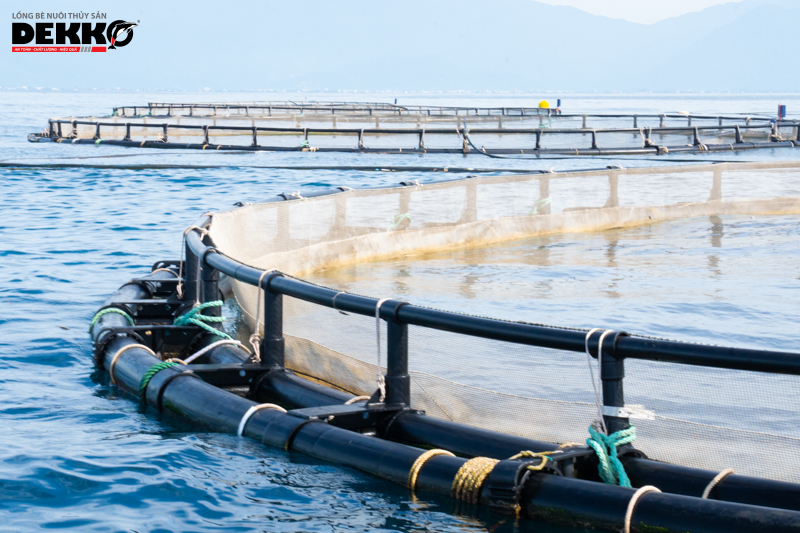
This is the main skeleton, including floating tubes and handrails.
- Materials: Primary HDPE plastic (usually PE100).
- Pipe diameter: Popular from $D200$ to $D500$.
- Pipe thickness (PN): Determines the ability to withstand water pressure. Open sea areas usually require PN10 or higher.
Connection systems & Accessories (Accounting for 15 - 20%)
- Bracket: Usually made of monolithic HDPE plastic or hot-dip galvanized steel.
- Bolts/Screws: Must be 316 stainless steel to prevent sea salt corrosion. Many units quote low prices by using 304 stainless steel, which will rust after only 1-2 years.
Mesh & Anchor system (Accounting for 20 - 25%)
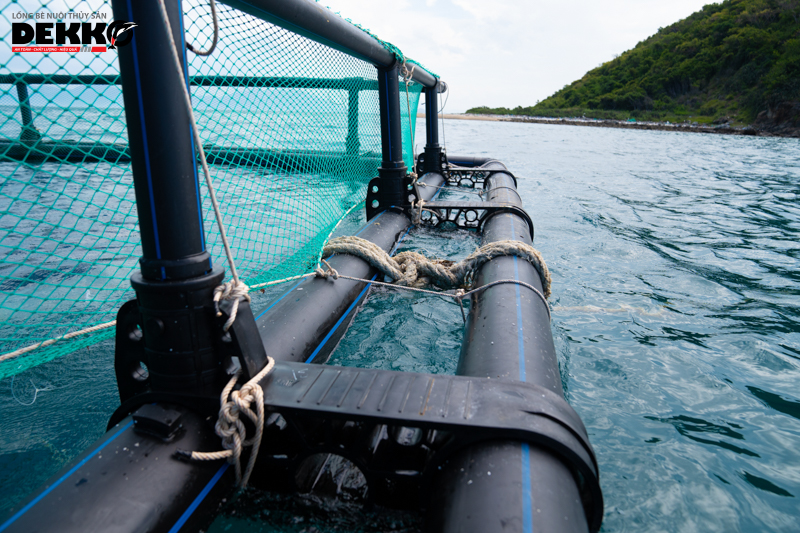
- Farming net: HDPE net without knots, anti-fouling.
- Anchoring system: Concrete turtles, specialized ropes and compensating buoys.
Popular cage models and how to calculate costs for farmers
To have an accurate quote for HDPE cages, the technical unit needs to survey actual conditions such as: open sea farming area or in the bay, water depth, wind level and investment scale. These are factors that directly affect structure and cost.
However, so that people can proactively estimate their initial budget, HDPE cages are currently often divided into 2 main lines with the following cost calculation:
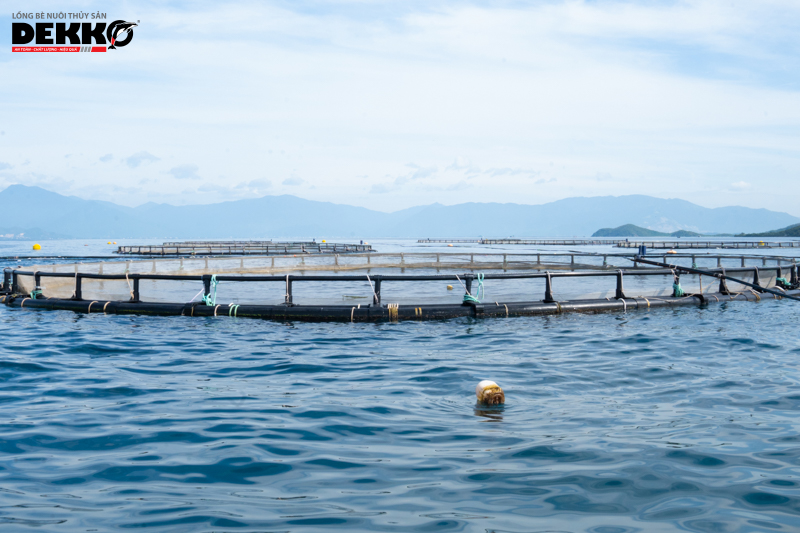
HDPE round cage solution (Specialized for open sea fish farming)
HDPE round cages are designed for offshore areas, where there are strong waves and currents. Thanks to the elastic properties of HDPE, the cage frame can adapt to wave movement, reducing direct pressure on the structure.
This is a suitable option when raising grouper, cobia, and yellowfin pompano in open ocean areas.
Common cage sizes: Diameters usually range from 10m, 12m, 15m to large types of 20m - 30m depending on scale.
How to calculate the cost of HDPE round cages
When consulting on the price of round HDPE cages, the cost will depend on:
- Number of floating tube rings (2 rings or 3 reinforced rings)
- Is there a handrail system and working platform installed?
- Plastic pipe thickness and standards according to design corrugated level
- Anchor system and associated accessories
- Total number of cages deployed in the same cluster
Seas with large waves will require thicker pipes and stronger anchor systems, so the investment level will vary according to actual conditions.
Economic advantage:
Although the initial cost is higher than wooden rafts, HDPE round cages have a long lifespan, good wave resistance and a stable water circulation environment, helping to limit risks during the farming process.
Although the initial cost is higher than wooden rafts, HDPE round cages have a long lifespan, good wave resistance and a stable water circulation environment, helping to limit risks during the farming process.
Square and rectangular cage solutions (Optimal for raising lobsters and specialty fish in the bay)
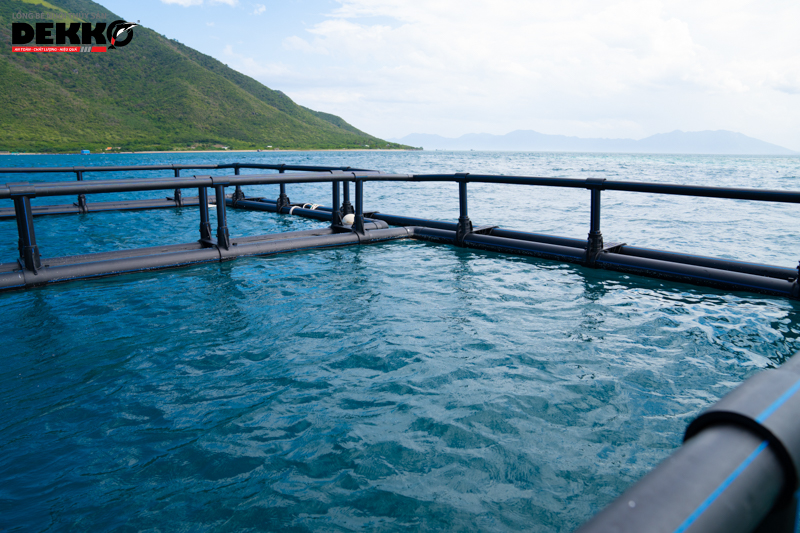
Square or rectangular HDPE cages have a design similar to traditional rafts, so they are easy to manage and suitable for bay areas and windy estuaries.
Commonly used sizes: People often choose 4m x 4m or 5m x 5m boxes, but can also be processed upon request.
How to calculate the price quote for square HDPE cages
Costs will be based on:
- Size of each cage cell
- Floating tube thickness
- Float system and travel corridor
- Number of cells installed in clusters
Note when looking at prices: If installing each cell individually, the cost per cell will be higher. When deployed in rows (10 - 20 cells or more), the cells can use the same buoy system, corridor and main mooring platform, thereby optimizing overall costs.
Economic problem when investing in HDPE plastic cages: High cost but is it really a "capital loss"?
When looking for quotes for HDPE rafts, many people often immediately compare them with traditional wooden rafts and see that the initial investment is significantly higher. This leads to fear: will investing in HDPE plastic cages be too expensive and difficult to recover capital?
In fact, to properly evaluate the economic efficiency of HDPE cages, it is necessary to look at the entire life cycle instead of just considering the initial cost.
Annual repair and maintenance costs
With traditional wooden rafts or foam floats, people often have to:
- Replace anchor ropes and reinforce frames after each stormy season
- Anti-rot paint, replace degraded floats
- Repair floors, replace damaged wooden bars
These expenses are repeated almost every year and add up to a large number.
Meanwhile, HDPE plastic cages are resistant to salt water corrosion, UV rays and are less likely to break. If installed correctly, the cage frame can be used for many years without needing to be replaced. This significantly reduces long-term maintenance costs.
Risk of damage due to wind storms
In coastal farming areas, the biggest risk is damage after storms. When the raft structure is not durable enough, just one large wave can cause serious damage, leading to loss of farmed fish.
HDPE round cages or HDPE square cages are designed with elastic properties, helping to disperse wave force instead of bearing hard force. Thanks to that, the system has the ability to recover its shape after strong weather impacts.
If calculated according to risk management, investing in HDPE cages can be considered a solution to minimize property damage and farming output.
Commercial value and farming efficiency
A factor that is rarely mentioned when considering the price of HDPE cages is the impact on the quality of farmed fish.
Farming environment in HDPE plastic cages:
- Less prone to wood rot and sawdust falling
- No degradation causing local pollution
- Better water circulation
This helps fish grow stably, limit disease and maintain beautiful appearance. With exported marine fish lines, quality factors and size uniformity can directly affect the selling price.
Actual payback period
If only comparing the initial cost, HDPE plastic cages are higher than wooden rafts. However, when calculating:
- Annual repair costs
- Risk of damage due to weather
- Service life lasts many years
In many cases, after a few stable farming seasons, profits can compensate for the difference in initial investment. From the following years, the cage system continues to be used without incurring large replacement costs.
When considering quotes for HDPE cages, farmers should consider this a long-term investment in farming infrastructure instead of a short-term cost.
Choosing the right configuration according to the farming area will help optimize costs, ensure safety and maintain stable production efficiency over many seasons.
Where should I buy reputable HDPE plastic cages?
When looking for quotes for HDPE cages, in addition to cost factors, people and investors need to pay special attention to the production unit. A cage system used for many years at sea requires standard materials, strict manufacturing processes and a clear warranty policy.
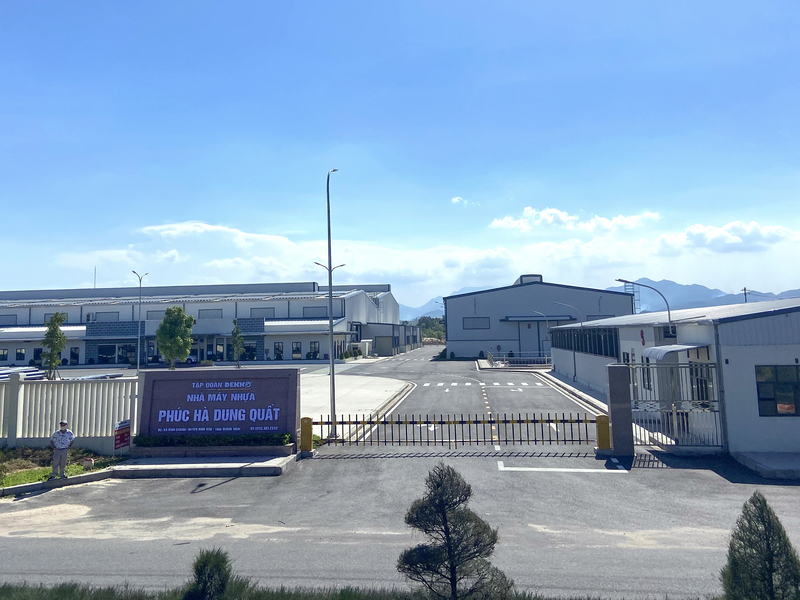
Among plastic manufacturing enterprises in Vietnam, Dekko Group is one of the units with large production capacity, with a total capacity of over 300,000 tons of plastic per year. Not only focusing on the field of industrial plastic pipes, Dekko also develops HDPE plastic cage solutions for modern and sustainable aquaculture.
Production capacity and technology
The machinery system and HDPE cage production line are invested synchronously according to advanced technology standards. Thanks to strict control from raw materials to finished products, the product ensures:
- Using high quality HDPE plastic
- Good resistance to corrosion and UV rays
- Designed to suit Vietnam's sea conditions
- Long-term durability over time of use
In addition, proactive production helps optimize supply schedules and promptly meet the needs of large-scale project implementation.
Design as required - Optimized for each farming area
As a direct production unit, Dekko has the ability to process cages according to individual sizes and configurations, suitable for each farming area: open sea, bay lagoon or calm water area.
This is especially important when referring to the price of HDPE cages, because each farming region will have different requirements for pipe thickness, anchoring systems and accompanying accessories. Correct design from the beginning will help optimize costs and ensure long-term operational safety.
Solutions towards sustainable marine farming
Not only stopping at providing products, Dekko's HDPE plastic cages aim to develop aquaculture in a stable and long-term way. Gradually replacing traditional wooden rafts with HDPE material contributes to reducing natural wood exploitation and limiting marine environmental pollution.
Thanks to the consistent quality of products and services, many farming households and investment units have chosen this solution when deploying new cage systems.
When considering where to buy HDPE plastic cages, people should prioritize manufacturers with actual capacity, transparency in technical specifications and clear after-sales policies. This is an important factor to help ensure long-term investment efficiency.
In short, "Smart investment, sustainable profitability" is not simply a story about a number. This is an overall problem between initial investment costs, operational safety and long-term profitability.
When looking for quotes for HDPE cages, the important thing is not to choose the lowest price, but to choose the configuration that suits the conditions of the farming area and the aquatic species. Instead of viewing this as a large short-term expense, look at HDPE plastic cages as a long-term production infrastructure. When designed and installed properly, the system can accompany people for many years without having to invest from the beginning.
Investing right from the beginning is the foundation for safe, sustainable and profitable marine farming in the future. Contact Dekko Group to receive preferential quotes and detailed advice:
- Head office:Lot 2-4-5 Nam Thang Long Industrial Park - Thuong Cat Ward - Hanoi City - Vietnam.
- Hotline: 1900 1998
News in the same category
You may be interested

16/03/2026
test
11/03/2026
Lồng bè HDPE ven biển – Lời giải cho bài toán nuôi biển bền vững tại Việt Nam
Nuôi biển bền vững đang trở thành hướng phát triển quan trọng tại nhiều địa phương ven biển Việt Nam như Khánh Hòa, Phú Yên, Quảng Ninh hay Kiên Giang. Trước áp lực suy giảm nguồn lợi thủy sản, biến đổi khí hậu và yêu cầu bảo vệ môi trường ngày càng khắt khe, việc chuyển đổi sang mô hình nuôi biển hiện đại là xu thế tất yếu. Trong bối cảnh đó, lồng bè HDPE ven biển được xem là giải pháp hiệu quả giúp nâng cao năng suất, giảm rủi ro và kéo dài tuổi thọ hệ thống nuôi. Không chỉ mang lại lợi ích kinh tế, mô hình này còn góp phần thúc đẩy ngành nuôi biển phát triển theo hướng bền vững, quy mô và thân thiện với môi trường.
11/03/2026
Lồng bè nhựa HDPE – Nền tảng cho cuộc chuyển dịch nuôi biển hiện đại
Trong khoảng 10 năm trở lại đây, ngành thủy sản Việt Nam đang chuyển dịch mạnh từ tư duy “nuôi nhiều” sang “nuôi bền vững và giá trị cao”. Các mô hình nuôi biển hiện đại không chỉ hướng tới sản lượng mà còn chú trọng tính ổn định, an toàn và khả năng đáp ứng tiêu chuẩn xuất khẩu. Trong xu hướng đó, lồng bè nhựa HDPE đang trở thành giải pháp hạ tầng quan trọng cho nuôi biển công nghệ cao. Nhờ độ bền vượt trội, khả năng chịu sóng gió tốt và tuổi thọ dài, lồng bè nhựa HDPE giúp giảm chi phí bảo trì, nâng cao hiệu quả nuôi trồng. Đây được xem là nền tảng quan trọng để phát triển nuôi biển xa bờ và kinh tế biển bền vững tại Việt Nam. Convenient purchase
 Delivery
 quickly
 Attractive offers
 Flexible payment