



Industrial HDPE cages: Sustainable and effective marine farming solution for large-scale models


What are industrial HDPE raft cages? The inevitable trend of modern marine farming
Industrial HDPE cages are aquaculture systems made from High-Density Polyethylene (high-density thermoplastic). This is not only a farming device but also a technical achievement that completely changes the way of thinking about farming at sea.
Unlike traditional cages made from wood, bamboo, iron or floating drums, industrial HDPE cages are designed according to high technical standards, with a synchronized modular structure, large diameter pipe frame and specialized anchor system, suitable for:
- Offshore marine farming
- Large-scale industrial farming
- Methodical, long-term investment projects
- Farming model combined with ecotourism
The core difference lies in its stability, long lifespan and ability to withstand harsh environments.
The shift to using HDPE plastic cages for aquaculture is no longer a personal choice, but has become a strategic trend of Vietnam's seafood industry for the following reasons:
1.1. The shift from "coastal" to "offshore"
For decades, Vietnamese aquaculture has focused mainly on coastal bays and lagoons. However, too high farming density has led to water pollution, widespread disease and decline in commercial product quality.
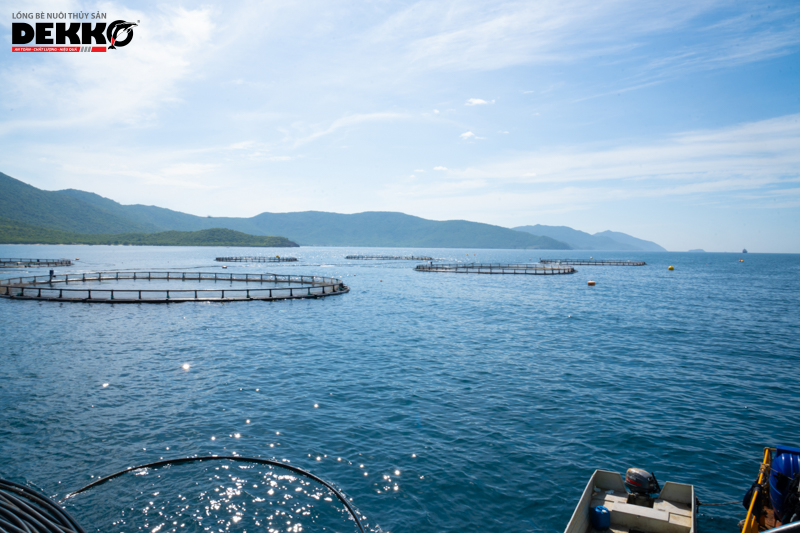
- Strategic vision: According to the Government's marine aquaculture development project, the goal by 2030 is to reduce the pressure on coastal aquaculture, expanding to open sea areas (3-6 nautical miles from shore and farther).
- The role of industrial HDPE rafts: In open ocean areas, waves can be 3-5m high and the current is fast. Only the industrial HDPE raft system with its elastic and load-bearing properties can withstand it, while traditional wooden rafts will be destroyed after just one big storm.
1.2. Adapting to climate change and weather extremes
The East Sea has more and more storms with strong intensity and complex orbits. Using wood, bamboo or foam floats is no longer appropriate because:
- High risk: Wooden rafts are not able to withstand strong waves, easily causing loss to fishermen.
- Environmental consequences: Styrofoam buoys and rotten wood after storms become ocean plastic waste, causing serious pollution. Dekko's HDPE aquaculture cages are designed to "blend" with the ocean waves. Instead of rigidly resisting wave force, HDPE plastic curves along the water surface, dispersing impact forces, protecting the safety of fish and shrimp inside even in the harshest weather conditions.
1.3. Meet strict export standards (ASC, GlobalGAP)
International markets (EU, US, Japan) are increasingly strict with food safety and environmental indicators.
- Clean materials: Virgin HDPE plastic is non-toxic and does not cause microplastics to adhere to fish muscle tissue.
- Smart management: Industrial cage structure allows integration of modern marine farming technologies such as automatic feeding systems and environmental sensors. This is something that traditional wooden rafts cannot do synchronously.
1.4. Economic problem: One-time investment, long-term profit
Many people are afraid that the cost of investing in industrial HDPE cages is 3-4 times higher than wooden rafts. However, let's look at the actual numbers:
- Wooden raft: Life expectancy is 2-4 years, annual repair costs account for 15-20% of the raft's value.
- HDPE cage: Lifespan up to 50 years, almost no cage maintenance costs.
- Livestock survival rate: Thanks to a well-ventilated water environment and limited disease, the survival rate increases by 20-30%, helping to shorten the payback time to only 2-3 farming crops.
Modern marine farming is no longer a story of "luck" with nature. It is a combination of sustainable infrastructure engineering and long-term economic thinking. Converting to Dekko industrial HDPE cages is the passport for fishermen to enter the era of sustainable and professional marine farming.
Detailed structure of industrial HDPE cages: The perfect combination of durability and technology
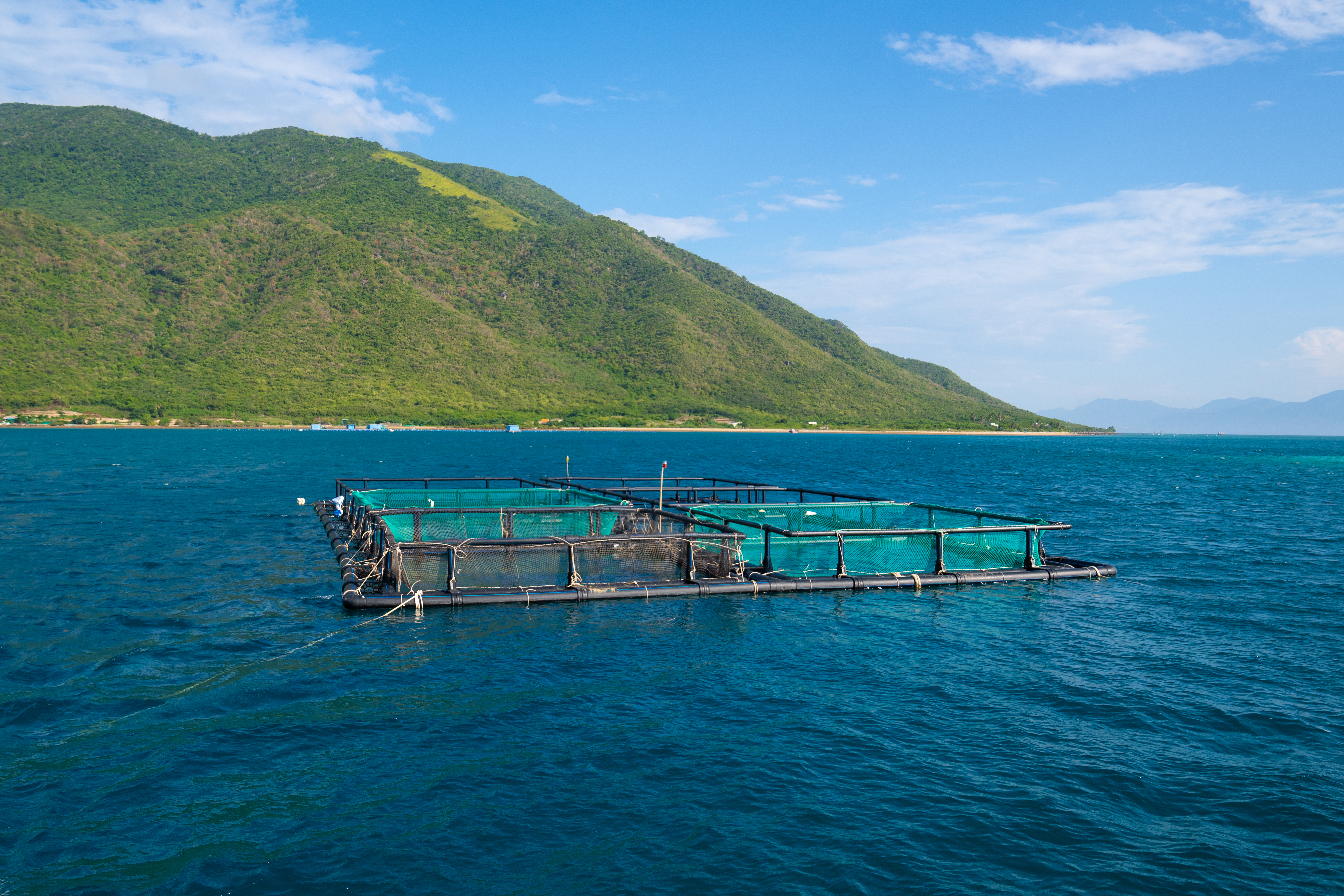
A standard industrial HDPE cage system is not simply a series of pipes, but a technical complex carefully calculated to withstand the destructive force of the ocean:
Floating frame system made of large diameter HDPE pipes
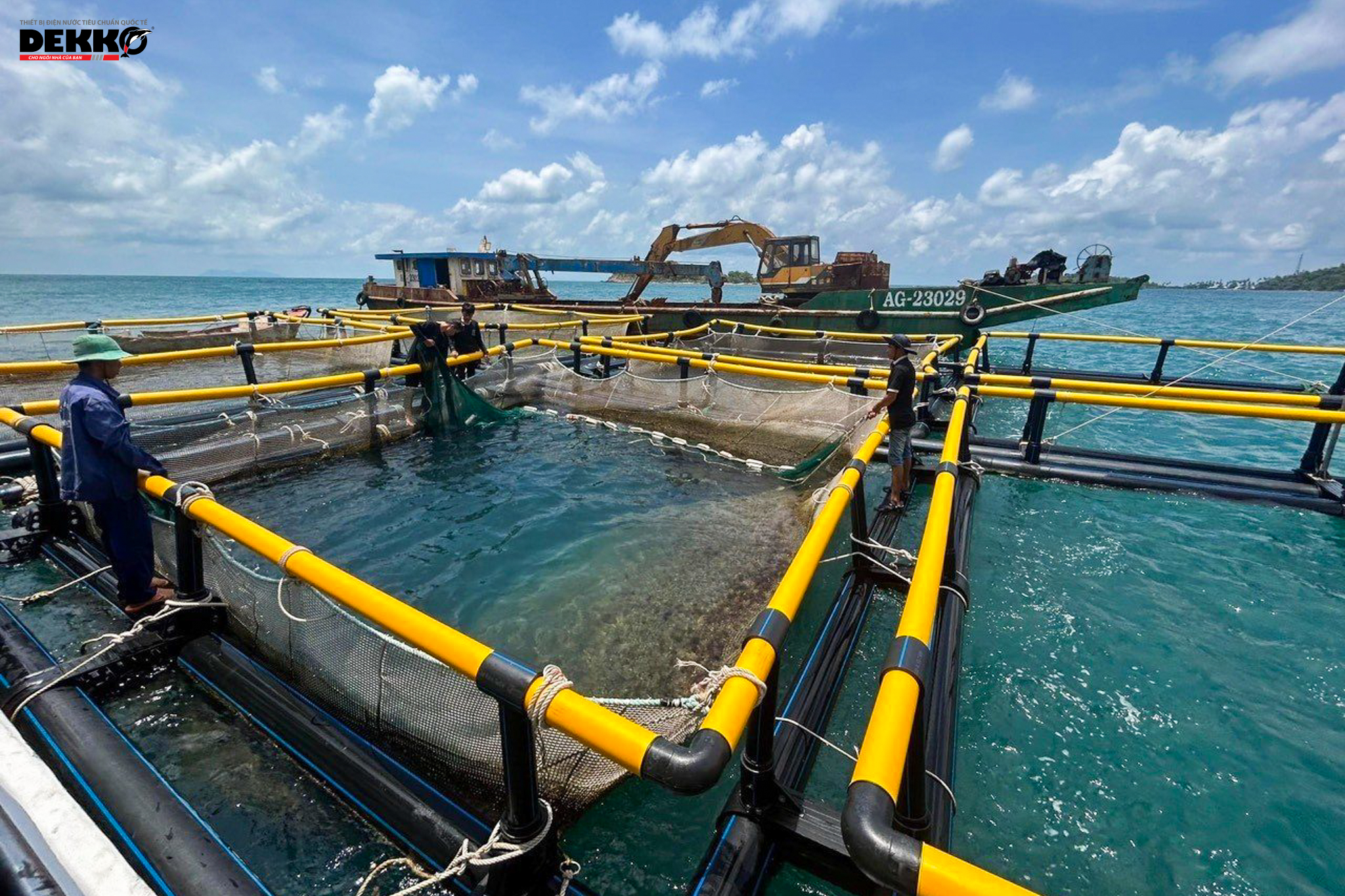
This is the "backbone" of the entire cage system. The floating frame is usually made up of 2 or 3 rounds of HDPE plastic pipes running in parallel, connected to each other by a sturdy stanchion pile system.
- Outstanding technical specifications: Dekko HDPE pipes are manufactured according to ISO 4427 standards, using virgin PE100 plastic.
- Buoyancy and force dispersion: Thanks to the thick and hollow tube walls, the cage frame has extremely high buoyancy, keeping the entire system stable on the water surface. In particular, the natural elasticity of HDPE plastic helps the cage frame to self-disperse shock, preventing it from cracking or permanently deforming when impacted by strong waves or boats.
Specialized anchor and rope system
For an industrial HDPE raft farm to stand firmly in the middle of the sea, the anchoring system plays a decisive role.
- Multi-point anchoring mechanism: The system includes anchors (turtle anchors or iron anchors), anchor chains and pressure compensating buoys. This design allows the cage to have a certain flexibility to move up and down with the tide but still maintain a fixed position, not drifting during storms.
- Heavy-duty ropes: Use PP or PE ropes with high tensile strength to connect cage clusters into a unified network, increasing the overall resistance of the entire farming area.
Specialized farming net for industrial cages
The net is the direct living space of aquatic animals, so Dekko advises using high quality nets:
- Mesh material: Usually knotless mesh made from high-strength Nylon or HDPE fibers, helping to minimize friction, minimizing the chance of fish scratching their scales, leading to infection.
- Anti-organism attachment ability: The net is treated with specialized chemicals (non-toxic) to limit moss and barnacles from clinging to it, helping the water flow to circulate freely, providing enough oxygen for livestock.
Flexible module structure and synchronous accessory system
One of the most outstanding features of Dekko HDPE plastic cages is their modular design.
- Easy assembly and expansion: Components are linked together using prefabricated accessories and modern heat welding technology. Fishermen can start on a small scale and easily assemble additional modules to expand farming area when additional capital is available.
- Local repair and replacement: In case of rare problems, you only need to replace each broken pipe section or accessory without having to dismantle the entire cage system, helping to save maximum costs and time.
Economic efficiency when investing in industrial HDPE cages
Investing in industrial HDPE cages is not only a solution to upgrade marine farming infrastructure but also a strategic long-term financial decision. Compared to the traditional cage model, the HDPE cage system helps optimize operating costs, reduce risks and increase sustainable profits over time.
Reduce repair and replacement costs
Wooden cages or iron frames often incur periodic maintenance costs due to rot, rust or damage after each stormy season. Meanwhile, industrial HDPE cages are resistant to seawater corrosion, good impact resistance and effective UV rays resistance. Thanks to its long life, farmers can significantly reduce repair and replacement costs for many years of operation.
Limit damage caused by natural disasters
Natural disasters are one of the biggest risks to marine farming. HDPE cage system with elastic structure, force dissipation ability and sturdy anchor system helps reduce the risk of frame breakage and cage drifting during strong seas. Limiting losses means preserving investment capital and maintaining stable cash flow after each farming season.
Increase survival rate and farming productivity
Thanks to its airy design, stability against wind and waves and little deformation, the farming environment in industrial HDPE cages maintains better water quality. Limiting diseases, livestock grow faster and reach a more uniform commercial size. Higher survival rates directly increase harvest yields and profits.
Optimize labor and operating costs
Flexible modular design makes installation, expansion and system management simpler. Farmers do not need to use too many complicated mechanical equipment for maintenance or reinforcement like traditional cages. This helps save labor costs and shorten daily operation time.
Long-term investment value
Although the initial investment cost of industrial HDPE cages may be higher than traditional cages, considering the life cycle and safety level, this is an investment that brings outstanding economic efficiency. Instead of having to be replaced many times every 5–7 years, the HDPE system can operate stably for a long time, helping farmers optimize the total cost of ownership.
Overall, the economic efficiency of investing in industrial HDPE cages is not only reflected in the profit of each farming crop but also in the stability and sustainability for many years of production.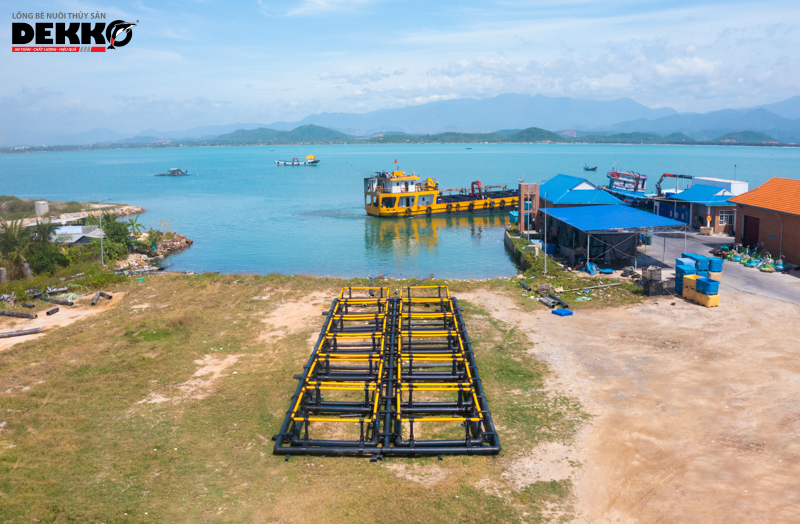
Popular types of HDPE cages today: Optimal design solution from Dekko
In order to meet the diversity of hydrological conditions, investment scale and farming subjects, Dekko Group has researched and developed a system of HDPE plastic cages for aquaculture with diverse structures. From traditional inshore farming models to offshore industrial farming projects, Dekko provides synchronous and effective solutions.
Dual tube HDPE cage system
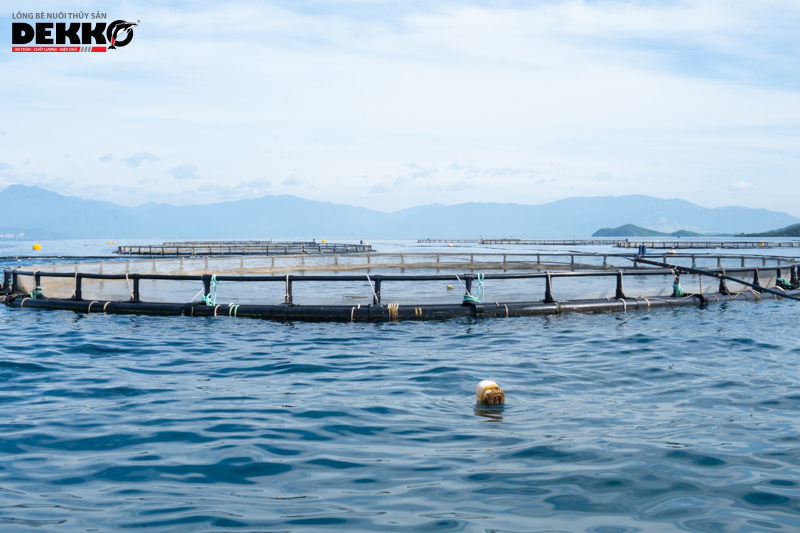
This is a key product line for coastal areas with harsh weather conditions. The dual tube structure creates extreme buoyancy and absolute stability.
Double tube HDPE round cage
- Introduction: Using high quality HDPE PE100 plastic material with a structure of 2 parallel pipes linked by a precast system of shackles and railing piles (Stanchion), forming a perfect load-bearing closed circle.
- Outstanding features:
- Resistant to natural disasters: Ability to withstand storms up to level 12 and sea waves up to 14m high. This is the safest solution today for open sea areas.
- Flexibility: Able to proactively sink during heavy storms to avoid surface damage.
- Durability: Resistant to acids, alkalis, UV rays and not oxidized by sea water.
- Application: Suitable for open seas, around islands or deep bays with depths from 6m - 100m.
SIZE TABLE OF DUAL TUBE ROUND CAGE FRAME
Diameter farming cell (m) | Diameter floating tube (mm) | Diameter of handrail tube (mm) | Column spacing (m) |
≤20 | 250 | 110/125 | 2.0 |
28 ÷ 40 | 315 | 110/125 | 2.0 |
≥ 40 | 355/400 | 110/125 | 2.0 |
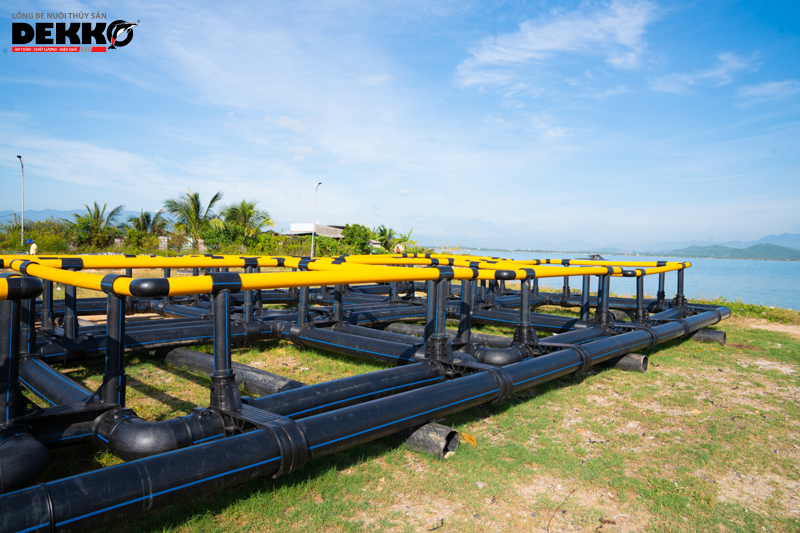
Lồng vuông HDPE ống kép
- Giới thiệu: Có cấu tạo tương tự lồng tròn về mặt vật liệu nhưng được định hình theo khung vuông hoặc chữ nhật, kết nối bằng cùm góc chuyên dụng của Dekko.
- Đặc tính ưu việt:
- Chịu được gió bão cấp 10 và sóng biển cao 9m.
- Thời gian sử dụng thực tế lên đến hơn 50 năm, tối ưu hóa chi phí khấu hao.
- Dễ dàng lắp đặt, vận hành và quản lý số lượng vật nuôi theo từng ô riêng biệt.
- Ứng dụng: Rất phổ biến tại vùng cửa sông, đầm phá, vịnh ven đảo có độ sâu từ 4m – 50m.
BẢNG KÍCH THƯỚC CỦA KHUNG LỒNG VUÔNG ỐNG KÉP
Kích thước ô nuôi (m) | Đường kính ống nổi (mm) | Đường kính ống lan can (mm) | Diện tích nuôi thả (m²) | Khoảng cách cột (m) |
4*4 | 160/200/250 | 110/125 | 16 | 2.0 |
5*5 | 160/200/250 | 110/125 | 25 | 2.0 |
6*6 | 160/200/250 | 110/125 | 36 | 2.0 |
8*8 | 160/200/250 | 110/125 | 64 | 2.0 |
10*10 | 160/200/250 | 110/125 | 100 | 2.0 |
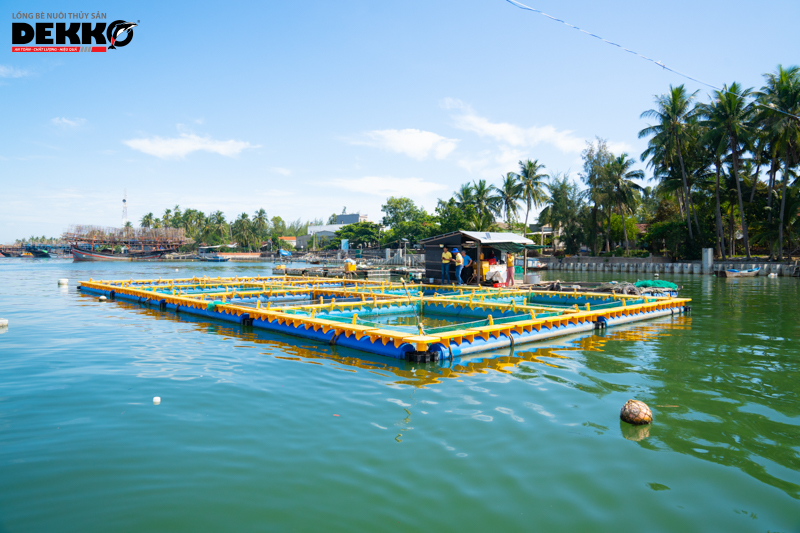
Hệ thống lồng HDPE ống đơn
- Giới thiệu: Giải pháp kinh tế hơn cho các vùng nước tĩnh. Kết cấu sử dụng 01 ống nổi HDPE chính được hàn gắn với tấm sàn (lối đi) và cùm góc chắc chắn.
- Đặc tính ưu việt:
- Thiết kế thông minh với lối đi rộng rãi, thuận tiện cho công nhân thao tác chăm sóc và thu hoạch.
- Khả năng chịu gió bão đến cấp 8.
- Dễ dàng ghép nối, mở rộng diện tích nuôi tôm hùm, cá bớp, cá chim... theo mô hình trang trại quy mô lớn.
- Ứng dụng: Chuyên dùng cho nuôi thủy sản tại hồ thủy điện, sông hồ lớn và các vùng vịnh kín gió.
BẢNG KÍCH THƯỚC CỦA KHUNG LỒNG HDPE ỐNG ĐƠN
Kích thước lồng (m) | Đường kính ống nổi (mm) | Diện tích nuôi thả (m²) |
4*4 | 335 | 16 |
5*5 | 335 | 25 |
6*6 | 335 | 36 |
8*8 | 335 | 64 |
10*10 | 335 | 100 |
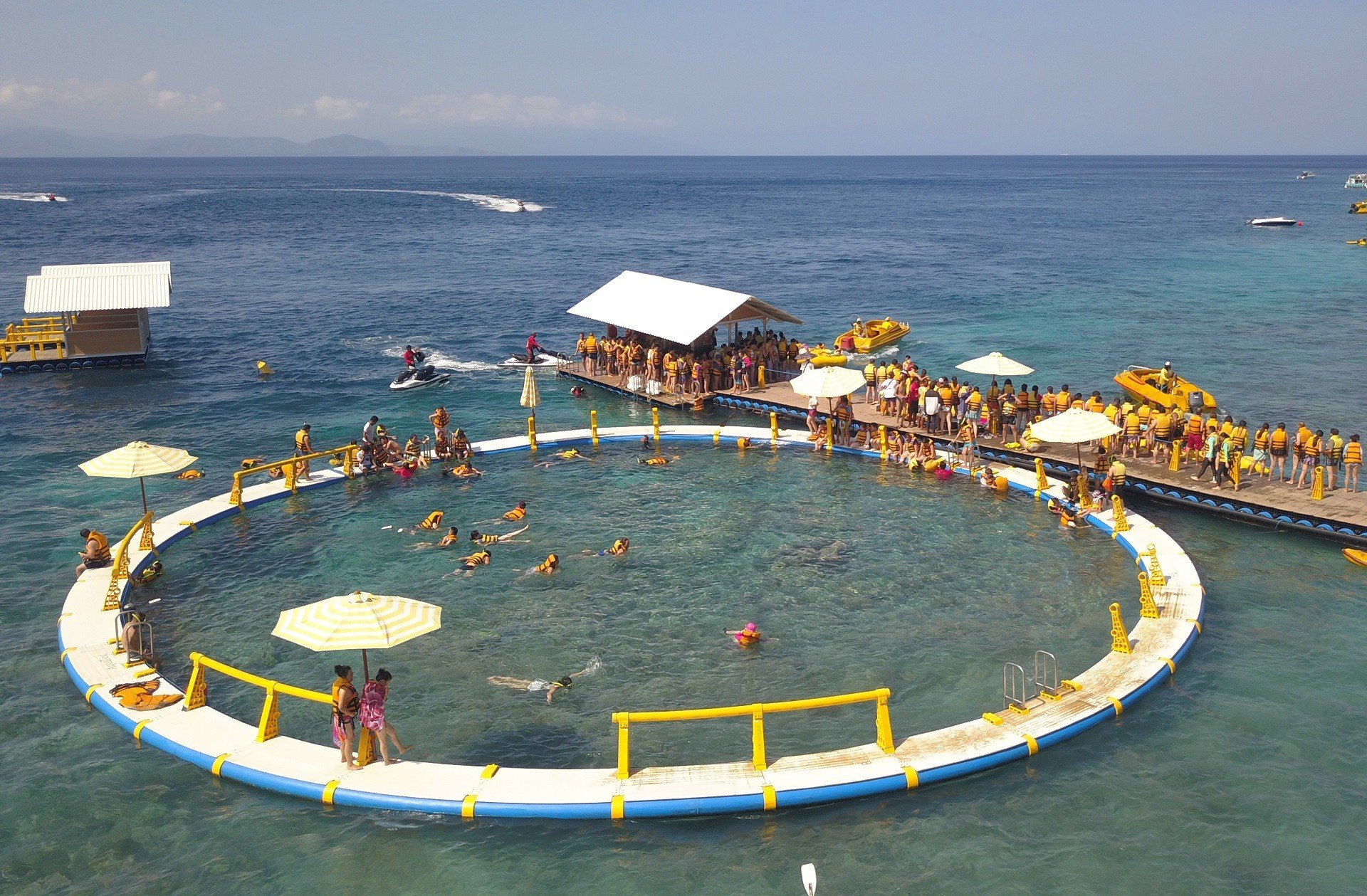
Lồng bè HDPE kết hợp du lịch trải nghiệm
Đây là bước đột phá của Dekko trong việc kết hợp giữa kinh tế biển và dịch vụ bền vững.
- Giới thiệu: Hệ thống sử dụng kết cấu ống đơn hoặc ống kép kết hợp với hệ phao nổi và tấm sàn chống trượt bề mặt rộng, tạo thành một tổ hợp vững chắc trên mặt nước.
- Ưu điểm khác biệt:
- Đa năng: Vừa là nơi nuôi thủy sản chất lượng cao, vừa là sàn đi lại an toàn cho khách du lịch tham quan, trải nghiệm câu cá và dịch vụ ăn uống.
- Thẩm mỹ và sạch sẽ: Thay thế hoàn toàn các loại bè gỗ cũ kỹ, nhem nhuốc bằng hệ thống nhựa HDPE hiện đại, nâng tầm bộ mặt du lịch địa phương.
- Thân thiện môi trường: Không gây ô nhiễm nguồn nước, có thể tích hợp hệ thống xử lý chất thải ngay trên bè.
- Ứng dụng: Phát triển tại các khu du lịch biển, các vịnh có cảnh quan đẹp như Vịnh Hạ Long, Lan Hạ, Nha Trang...
Lồng bè HDPE công nghiệp không chỉ là sự thay thế cho lồng gỗ truyền thống mà là bước chuyển mình của ngành nuôi biển Việt Nam theo hướng hiện đại, bền vững và chuyên nghiệp hóa. Với độ bền cao, khả năng chống chịu sóng gió, tuổi thọ dài và tính linh hoạt trong mở rộng quy mô, mô hình này giúp người nuôi giảm thiểu rủi ro và tối ưu lợi nhuận dài hạn.
Trong đó, lồng bè nhựa HDPE nuôi thủy sản của Dekko là giải pháp đáng tin cậy nhờ năng lực sản xuất mạnh, vật liệu chất lượng cao và khả năng thiết kế theo yêu cầu thực tế. Đây chính là nền tảng vững chắc để các trang trại nuôi biển phát triển bền vững trong kỷ nguyên nuôi trồng công nghiệp và hội nhập quốc tế.
News in the same category
You may be interested
Quote for HDPE cages: Costs & solutions for sustainable marine farming
What is the current quote for HDPE cages and what factors determine the investment cost? This article will analyze in detail the items that make up the HDPE plastic cage system such as cage frames, connection accessories, farming nets and anchor systems. Thereby helping people and investors clearly understand how to calculate the price of HDPE cages, avoiding "cheap" options but with potential risks from poor quality materials. At the same time, the article also provides a comprehensive perspective on the long-term economic efficiency of investing in HDPE cages in modern marine farming, helping to optimize costs, increase project durability and ensure sustainable seafood production.
test
Lồng bè HDPE ven biển – Lời giải cho bài toán nuôi biển bền vững tại Việt Nam
Nuôi biển bền vững đang trở thành hướng phát triển quan trọng tại nhiều địa phương ven biển Việt Nam như Khánh Hòa, Phú Yên, Quảng Ninh hay Kiên Giang. Trước áp lực suy giảm nguồn lợi thủy sản, biến đổi khí hậu và yêu cầu bảo vệ môi trường ngày càng khắt khe, việc chuyển đổi sang mô hình nuôi biển hiện đại là xu thế tất yếu. Trong bối cảnh đó, lồng bè HDPE ven biển được xem là giải pháp hiệu quả giúp nâng cao năng suất, giảm rủi ro và kéo dài tuổi thọ hệ thống nuôi. Không chỉ mang lại lợi ích kinh tế, mô hình này còn góp phần thúc đẩy ngành nuôi biển phát triển theo hướng bền vững, quy mô và thân thiện với môi trường. Convenient purchase
 Delivery
 quickly
 Attractive offers
 Flexible payment