



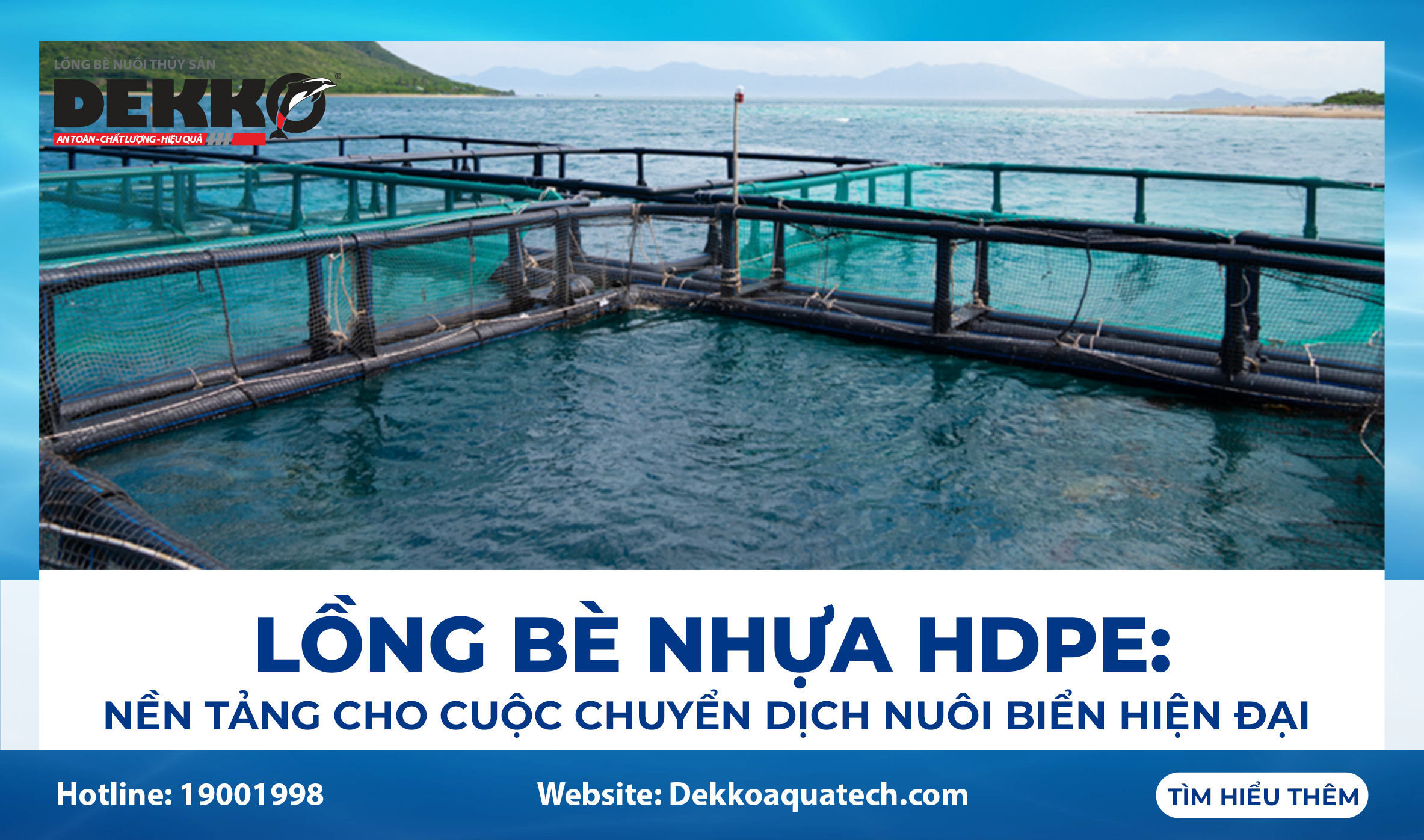
What is HDPE raft cage? Structure, advantages and applications in modern marine farming
10/03/2026
Share:


What is HDPE plastic cage?
HDPE plastic cages are aquaculture systems made from HDPE (High Density Polyethylene) - a high-density thermoplastic, outstanding with outstanding mechanical strength, waterproofing, anti-corrosion and effective UV resistance. Thanks to its stable properties against the impact of the marine environment, HDPE cages are considered a modern and sustainable marine farming solution.
In the past, fishermen mainly used wooden and bamboo cages combined with foam floats or plastic barrels to create floating structures. This model has the advantage of low initial investment costs and ease of construction. However, after a period of use, many limitations often arise such as short lifespan, easy to rot or rust, polluting the water environment and landscape. In particular, the poor ability to withstand wind and waves makes traditional rafts easily damaged during storms, leading to great economic losses.
To overcome these shortcomings, HDPE cages have been researched, improved and widely applied in aquaculture. Thanks to its sturdy structure, stable buoyancy and good bearing capacity, this model helps improve productivity, reduce natural disaster risks and optimize long-term operating costs. Currently, HDPE cages not only bring high economic efficiency but also open up the trend of combining marine farming with ecotourism development, contributing to building a sustainable fisheries industry.
The structure helps HDPE cages to be sustainable in the marine environment
When learning what an HDPE cage is, the most important factor is the floating frame structure - the foundation that determines its durability and ability to operate long-term offshore. The cage frame is manufactured from large diameter HDPE pipes, thick walls, high buoyancy and the ability to effectively disperse force. Thanks to the natural elastic properties of HDPE material, the pipe can absorb and absorb shock well before the impact of large waves, impacts or movements of ships, limiting deformation and cracking.
The surface of HDPE pipes is less susceptible to algae, is easier to clean than traditional materials, and is not corroded by seawater or aging under the prolonged impact of UV rays. This is an important advantage that helps the system maintain mechanical durability and aesthetics throughout use.
The joints are linked with synchronized HDPE accessories, designed to be tight and sturdy, helping to increase overall stability and minimize the risk of splintering or separating joints when operating in adverse weather conditions.
In particular, thanks to modern extrusion technology according to international standards, each section of HDPE pipe achieves high uniformity in thickness and physical and mechanical indexes, ensuring long-term stability of the raft frame throughout the farming cycle. This is the core factor that helps HDPE cages become a sustainable solution for high-tech marine farming.
Why are HDPE cages increasingly the preferred choice in modern marine farming?
After understanding what HDPE cages are, many marine farmers continue to be interested in why this model is increasingly being prioritized to replace traditional wooden and bamboo cages. In fact, HDPE plastic cages possess many outstanding advantages in terms of durability, economic efficiency and environmental factors.
Strong storm resistance, minimizing natural disaster risks
The HDPE cage system is manufactured from plastic with high mechanical strength, combined with sturdy nets and ropes to help stabilize the farming frame, reducing the direct impact of wind and waves. Thanks to its good elastic properties, the cage frame can absorb and disperse force during rough seas.
In addition, the anchor system is designed to be flexible, able to adjust buoyancy according to the tide or actively lower it in bad weather, increasing resistance in harsh conditions. Reality in many coastal farming areas in the Central region shows that, during major storms, HDPE cages still maintain a stable structure, minimizing damage compared to traditional wooden cages.
High economic efficiency, increased farming productivity
Compared to wooden cages, which often require many adjacent cells, HDPE cages can be arranged separately, creating a more open space for circulation. Thanks to that, the water environment is more stable, with higher oxygen content, helping fish grow healthily, reducing loss rates and limiting disease.
Besides, the neat and synchronous design makes the operation, care and harvesting process simpler, without requiring a lot of complicated mechanical equipment. This contributes to optimizing labor costs and improving long-term exploitation efficiency.
Outstanding durability, lifespan can be up to decades
Aquaculture cages made from HDPE plastic have good impact resistance, can withstand large loads, and are not corroded by seawater or chemicals such as acids, alkalis, and salt. At the same time, this material effectively resists UV rays, limiting aging due to direct sunlight.
Thanks to that, the system's lifespan can last for many years, helping farmers reduce repair and replacement costs and consider this a long-term sustainable investment.
Environmentally friendly
Although traditional rafts have a low initial cost, they often generate waste because the foam floats are fragile, difficult to collect, and pollute the water surface. Meanwhile, HDPE material is highly durable, less damaged and can be reused, contributing to minimizing negative impacts on the marine environment.
Thanks to these comprehensive advantages, HDPE cages are increasingly becoming the preferred choice in modern marine farming, aiming for sustainable development and improving economic value for aquaculture farmers.
What types of seafood are HDPE cages suitable for?
After learning what HDPE cages are, many marine farmers are interested in the practical applicability of this model. With high durability, stable structure and good ability to withstand wind and waves, HDPE cages are suitable for many economically valuable aquaculture subjects.
Specifically, this system is especially suitable for:
- High-value marine fish such as plaice, cobia, grouper, cobia - species that require good water circulation and large swimming space.
- Brackish water fish and estuarine fish, where tidal conditions and salinity frequently change.
- The fixed cage lobster farming model requires a sturdy cage frame, good strength and limited strong shaking.
- Large-scale farming projects in deep water areas, where stability and resistance to harsh weather conditions are required.
Thanks to its ability to absorb damping, shock and maintain stability against large waves, HDPE cages help animals grow healthily, reduce stress, limit disease and reduce loss rates. At the same time, the solid frame structure also limits damage, deformation or "net jamming", ensuring a safe and sustainable living environment for seafood throughout the farming cycle.
Expanding farm scale is easier with HDPE cages
One of the reasons why HDPE cages are increasingly being chosen is the ability to flexibly expand without disrupting farming activities. In reality, developing aquaculture farms in each investment phase requires the cage system to be highly modular - and this is the outstanding strength of HDPE cages.
Thanks to the modular design, each cage can be assembled, supplemented or linked together with synchronized accessories without dismantling the existing frame system. This helps farm owners easily expand farming area according to each crop or financial plan, optimizing investment capital flow while still ensuring continuous operation.
HDPE frames are light in weight but can bear high loads, making them convenient for transportation, installation and direct connection in the farming area. Even in deep water or areas with fluctuating waves and tides, the frame system maintains stability, allowing the new cage cells to integrate into the entire system without affecting the center of gravity or buoyancy of the raft.
Besides, the flexibility in design also allows adjusting the size of cages, dividing areas for raising fingerlings, commercial fish or different aquatic species. Thanks to that, the model can gradually expand according to actual needs without needing to restructure from the beginning - both saving time and reducing long-term upgrade costs.
With virgin HDPE material, corrosion resistance, stable buoyancy and long life, HDPE cages are not only a modern marine farming solution but also a sustainable foundation for large-scale seafood farms to develop safely and effectively.
Application of HDPE plastic fish cages in localities
Thanks to proven practical effectiveness, the application of HDPE plastic fish cages in localities is increasingly expanding nationwide. Many coastal provinces and cities have proactively invested in and converted from traditional wooden cages to HDPE cages to improve safety and farming efficiency.
This model is currently widely deployed in localities with a developed marine farming industry such as Quang Ninh, Van Don, Nghe An, Khanh Hoa, Nha Trang, Kien Giang, Ba Ria - Vung Tau... These are all areas with advantages in sea and islands but at the same time are often affected by tropical depressions and major storms.
In increasingly complex weather conditions, aquaculture farmers face many risks to property and production safety. The introduction of HDPE plastic cages to replace traditional materials is considered a suitable and necessary solution. Thanks to its ability to withstand wind and waves, resist corrosion and maintain long-term stability, the HDPE cage system helps minimize damage during natural disasters, while contributing to improving productivity and sustainability for the local marine farming industry.
Where to install HDPE cages for marine farming?
"Where to install HDPE cages for marine farming to ensure quality and long-term durability" is the concern of many households when deciding to use this model. Choosing the right manufacturer and supplier not only affects system longevity but also determines investment efficiency throughout the operation process.
With a production capacity of over 300,000 tons of plastic per year, Dekko Group is one of the leading enterprises in Vietnam in the field of production and application of HDPE plastic materials. Not only pioneering in technology, Dekko also focuses on developing HDPE cage solutions to transform the aquaculture model towards modernity, safety and sustainability.
The entire HDPE plastic cage production line at Dekko is invested synchronously with advanced technology, ensuring the product has high durability, the ability to withstand major storms and maintain stability in harsh marine environments. At the same time, the business continuously improves techniques and increases capacity to quickly respond to market demand.
In particular, as a direct manufacturer, Dekko has the ability to consult, design and produce according to the specific requirements of each farming area or investment model. This is an advantage that helps customers optimize costs and ensure the system is suitable for actual conditions.
With a technological foundation and production experience, Dekko HDPE cages aim to accompany fishermen in developing sustainable marine farming, improving productivity and minimizing risks of natural disasters.
Through the above analysis, it can be seen that understanding what HDPE cages are does not only stop at the material concept, but is also a story about a safe, sustainable and long-term economic efficiency marine farming solution. From sturdy structure, ability to withstand large waves, long life to flexibility when expanding scale, HDPE cages are gradually replacing traditional models and becoming an inevitable trend of the modern aquaculture industry.
In the context of climate change and increasing requirements for export standards, investing in HDPE cage systems not only helps reduce natural disaster risks but also improves productivity, optimizes operating costs and moves towards sustainable development. This is an important foundation for marine farmers to feel secure in long-term production and increase economic value for each farming crop.
News in the same category
You may be interested
16/03/2026
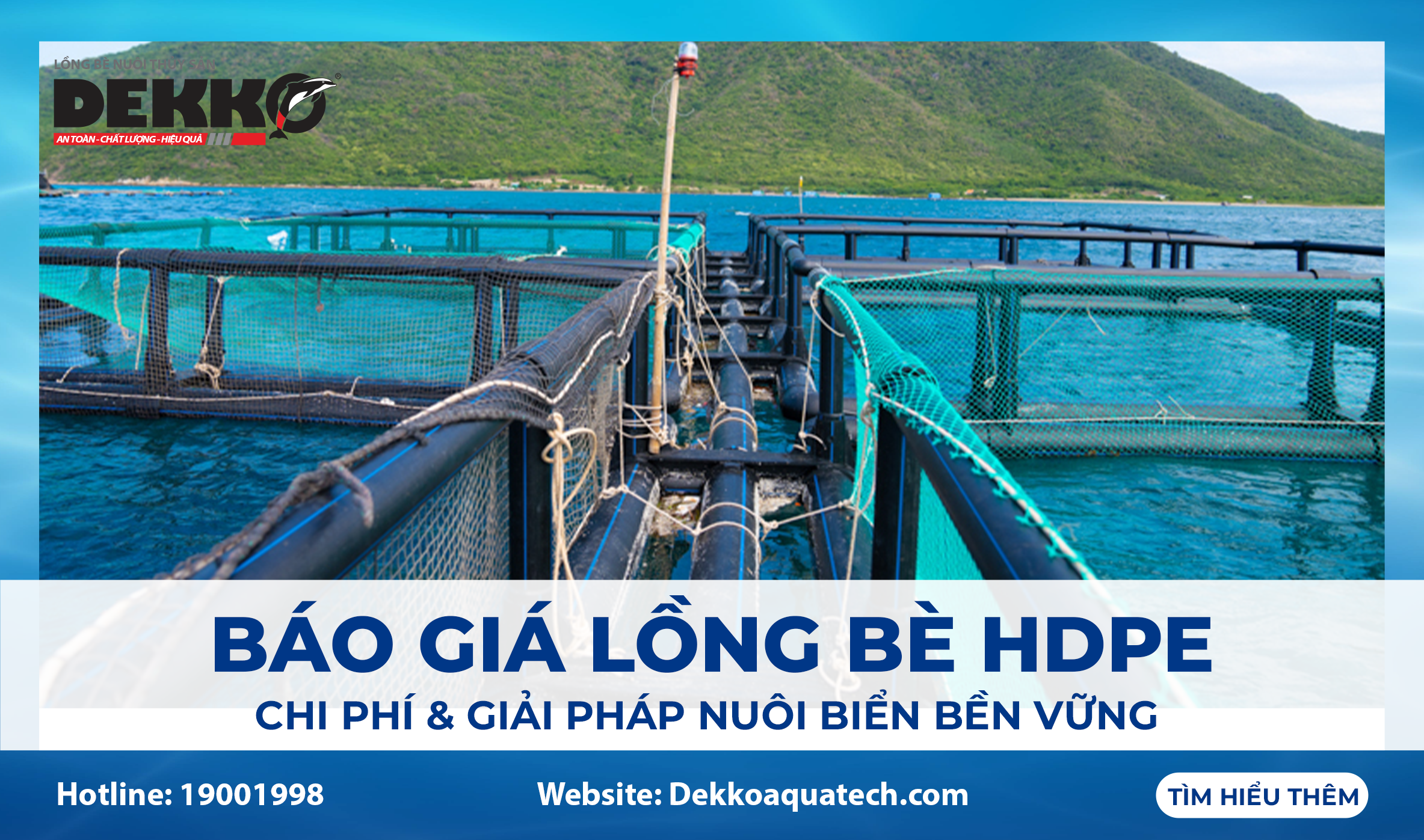
Quote for HDPE cages: Costs & solutions for sustainable marine farming
What is the current quote for HDPE cages and what factors determine the investment cost? This article will analyze in detail the items that make up the HDPE plastic cage system such as cage frames, connection accessories, farming nets and anchor systems. Thereby helping people and investors clearly understand how to calculate the price of HDPE cages, avoiding "cheap" options but with potential risks from poor quality materials. At the same time, the article also provides a comprehensive perspective on the long-term economic efficiency of investing in HDPE cages in modern marine farming, helping to optimize costs, increase project durability and ensure sustainable seafood production.
16/03/2026
test
11/03/2026
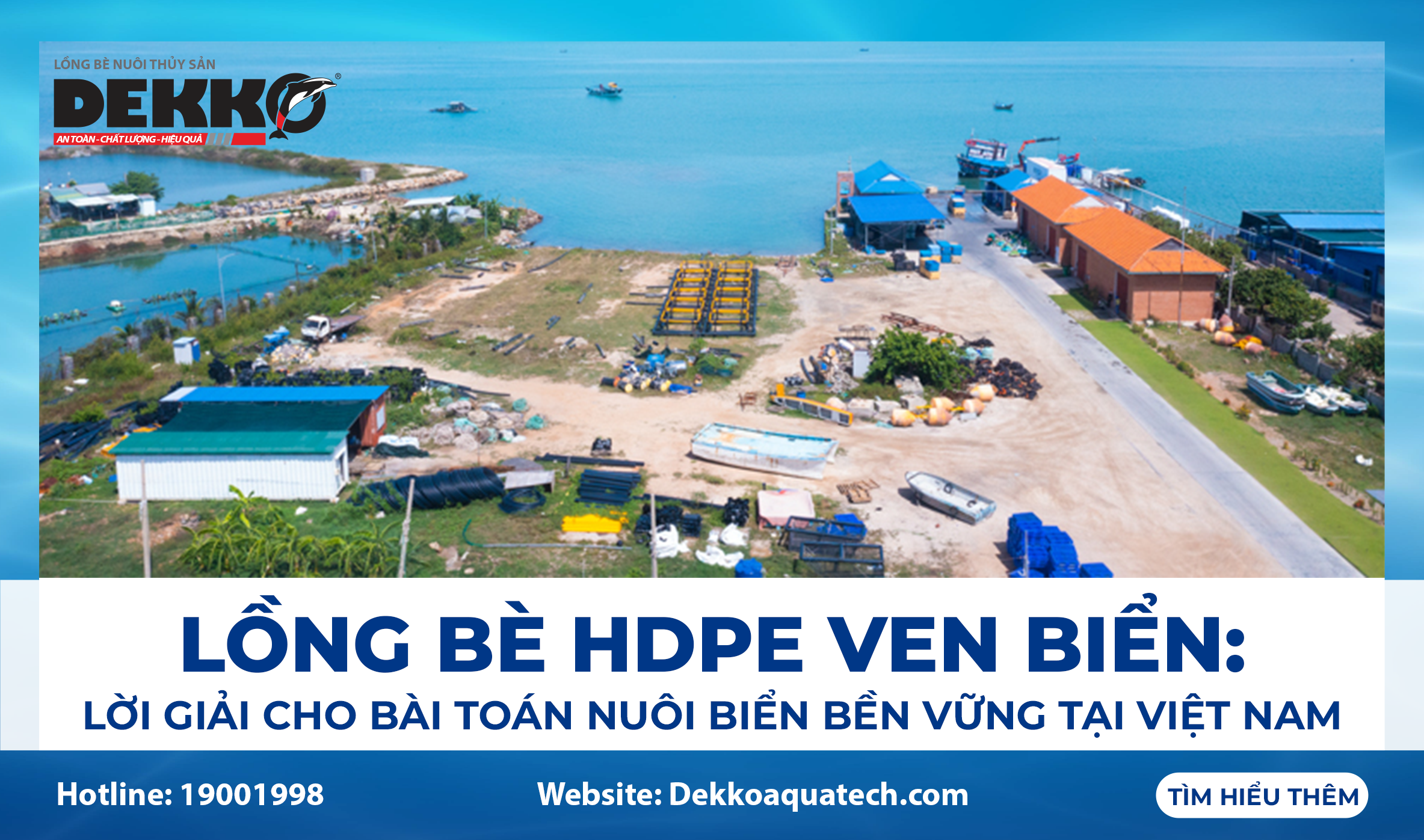
Lồng bè HDPE ven biển – Lời giải cho bài toán nuôi biển bền vững tại Việt Nam
Nuôi biển bền vững đang trở thành hướng phát triển quan trọng tại nhiều địa phương ven biển Việt Nam như Khánh Hòa, Phú Yên, Quảng Ninh hay Kiên Giang. Trước áp lực suy giảm nguồn lợi thủy sản, biến đổi khí hậu và yêu cầu bảo vệ môi trường ngày càng khắt khe, việc chuyển đổi sang mô hình nuôi biển hiện đại là xu thế tất yếu. Trong bối cảnh đó, lồng bè HDPE ven biển được xem là giải pháp hiệu quả giúp nâng cao năng suất, giảm rủi ro và kéo dài tuổi thọ hệ thống nuôi. Không chỉ mang lại lợi ích kinh tế, mô hình này còn góp phần thúc đẩy ngành nuôi biển phát triển theo hướng bền vững, quy mô và thân thiện với môi trường. Convenient purchase
 Delivery
 quickly
 Attractive offers
 Flexible payment